Driven by a dry climate, extreme temperatures, and a rapidly expanding population and industrial sector, the United Arab Emirates (UAE) faces unique water security challenges. With virtually no permanent rivers or significant freshwater sources, the nation has long relied on energy-intensive desalination. However, a paradigm shift is underway. Today, water and wastewater treatment in the UAE has evolved from a matter of basic survival into a sophisticated, highly strategic sector fueled by cutting-edge technology, circular economy goals, and massive government investment.
The Driving Forces: Scarcity, Strategy, and Growth
The UAE’s approach to water and wastewater management is guided by visionary national blueprints, notably the Water Security Strategy 2036. The strategy aims to ensure sustainable access to water, reduce total water consumption, and heavily promote the recycling and reuse of wastewater.
Key factors driving the rapid market expansion include:
- Population Growth & Urbanization: Expanding urban hubs like Dubai and Abu Dhabi demand robust municipal infrastructure to handle surging domestic water and sewage loads.
- Industrial Diversification: Economic initiatives are rapidly scaling up manufacturing, petrochemicals, and power generation, all of which require specialized industrial wastewater treatment.
- Stricter Environmental Compliance: Stringent regulations regarding wastewater discharge compel utilities and private industries to invest in superior, compliant technologies.
Municipal vs. Industrial Sectors: The Twin Pillars
1. Municipal Water & Wastewater
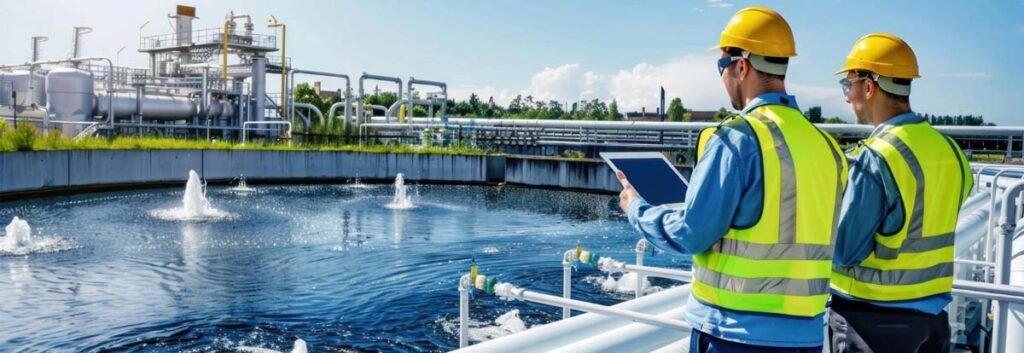
Municipal infrastructure remains the bedrock of the UAE’s water ecosystem, accounting for the lion’s share of market demand. Mega-desalination plants—such as the Al Taweelah and Jebel Ali complexes—provide the bulk of the country’s potable water. Concurrently, massive investments are flowing into municipal sewage treatment plants (STPs) to process urban run-off and greywater, turning what was once waste into a valuable resource for landscaping, district cooling, and agriculture.
2. Industrial Water & Wastewater
While municipal applications dominate in volume, the industrial sector is emerging as the fastest-growing segment. Sectors like oil and gas, food processing, and power production generate complex effluents that require advanced treatment equipment, heavy-duty pumps, and specialized chemical solutions (such as coagulants, flocculants, and scale inhibitors) to prevent scaling and corrosion.
Technological Innovations Transforming the Sector
To combat high energy costs and operational complexities, the UAE is aggressively integrating next-generation technologies into its water management infrastructure:
- IoT and Smart Monitoring: Digitalization is sweeping through water utilities. Internet of Things (IoT) sensors and condition-based monitoring platforms allow real-time tracking of pump vibrations, temperatures, and energy consumption, heavily reducing downtime and maintenance costs.
- Advanced Membrane Filtration: Reverse osmosis (RO) and specialized ceramic/non-woven industrial membranes are replacing older thermal desalination techniques due to their superior energy efficiency.
- Energy-Efficient Pumping Solutions: With centrifugal pumps acting as the backbone of UAE water distribution, innovations like variable-frequency drives (VFDs) and optimized impeller designs are cutting energy waste by up to 15%.
The Push Toward a Circular Economy
The ultimate goal for the UAE is closing the loop on water usage. Treated Sewage Effluent (TSE) is no longer viewed as a disposal burden; instead, it is a cornerstone of the country’s water conservation strategy. By upgrading wastewater treatment facilities to produce high-grade recycled water, the nation successfully offsets the heavy reliance on desalinated water for non-potable uses like urban landscaping, highway greenery, and specific industrial cooling applications.
Looking Ahead
With billions of dirhams earmarked for water infrastructure, the UAE’s water and wastewater treatment market presents profound opportunities for both domestic and international stakeholders—including global environmental engineering giants like Veolia, SUEZ, Xylem, and Metito.
By marrying visionary government mandates with smart automation, green chemistry, and efficient engineering, the UAE is setting a benchmark for water security in arid regions worldwide—proving that even in the desert, sustainable water management can thrive.